Planning a custom pool in Scottsdale
Permit offices, barrier rules, soils, heat, and pool contract law for Scottsdale and nearby towns, with sources for each fact.
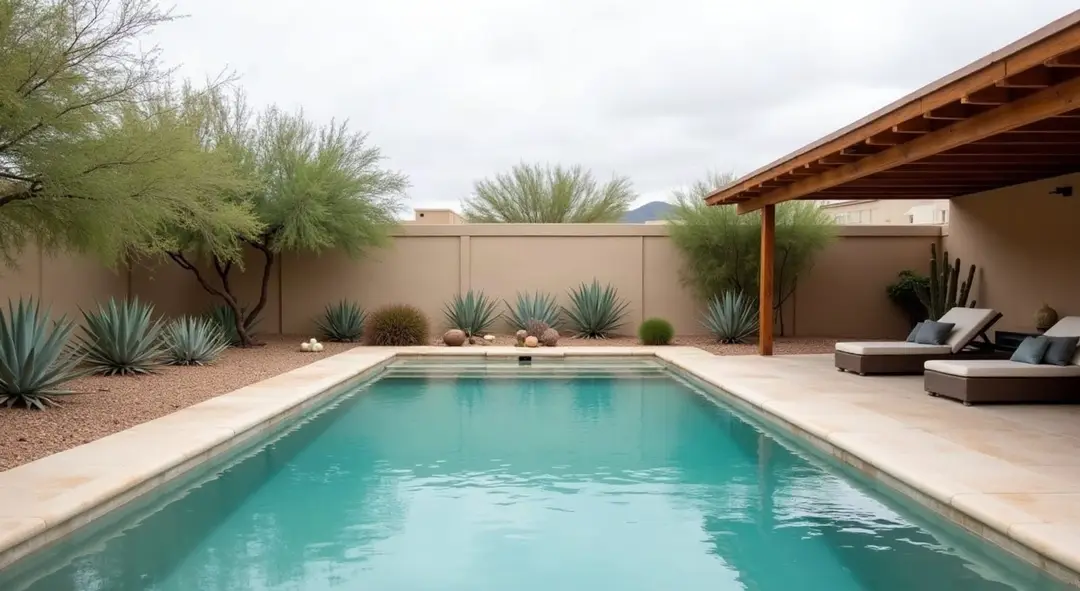
Before you talk to a pool builder
A custom pool in the Scottsdale area raises questions that most cities don't. Soil surveys map bedrock or cemented hardpan close to the surface under many north-side lots. Summer heat and monsoon storms affect where the pool goes and how the equipment runs. Arizona law also sets how a residential pool contract gets paid.
This site collects those rules in one place, with a source for each fact. Read it before you meet contractors and you can ask sharper questions and compare bids line by line.
Typical costs for a new pool
Published 2026 price guides put a new concrete pool at about $50,000 to $120,000 or more (typical, October 2026). One Arizona guide starts its range at $40,000. Treat these as guide figures, not quotes. The low end assumes a plain pool on an easy lot.
In Scottsdale, five things tend to move the price:
- Rock. Shallow bedrock or hardpan slows the dig. Ask how each bid prices rock if the dig hits it.
- Site work. Grading and drainage plans, retaining walls, and haul-off on a sloped lot add cost.
- Shade and decking. Check whether each bid includes them or lists them as extras.
- Features. Spas, vanishing edges, and full tile interiors cost more than a plain plaster pool.
- The barrier. Some lots need a new fence or wall, and in Scottsdale a new fence needs its own permit.
Compare bids that cover the same scope. A low number that leaves out the barrier, the decking, or the equipment pad describes a smaller project.
Start with the parcel
The City of Scottsdale, the towns of Paradise Valley, Fountain Hills, Cave Creek, and Carefree, and Maricopa County each run their own process, with different setbacks and checklists. The service area page lists what each one asks for.
Inside Scottsdale, the site plan carries most of the weight. It shows setbacks, easements, any natural area open space (NAOS), flood zones, the barrier, and the equipment location. The city won't approve the pool plan until it approves the fence or wall plan.
Ground, heat, and storms
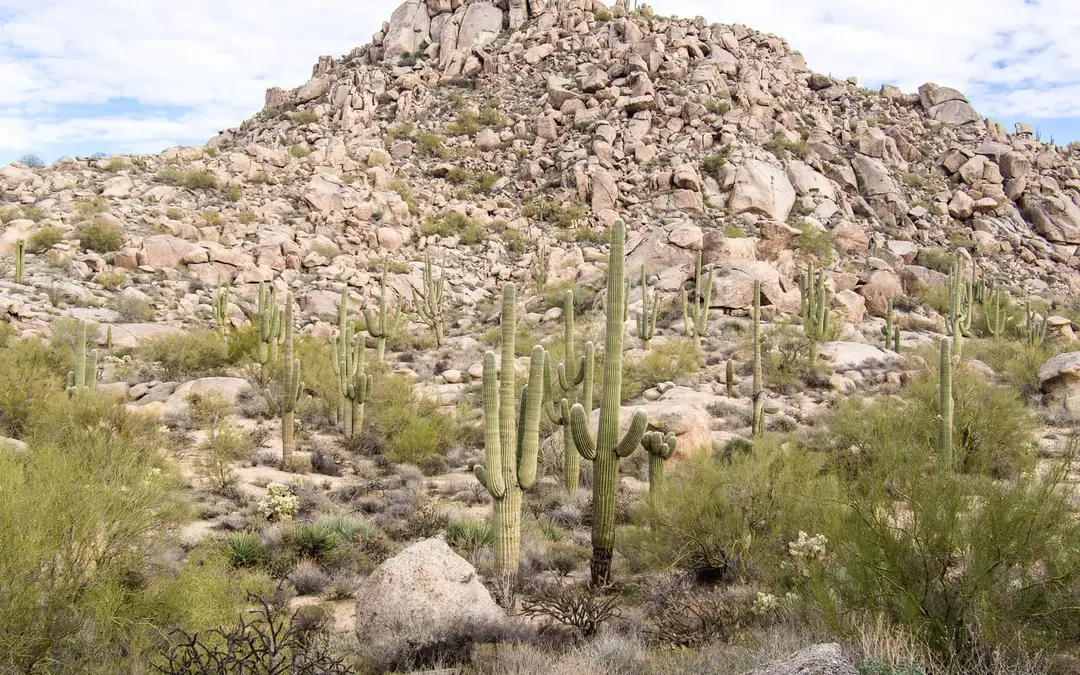
NRCS soil surveys for north Scottsdale, Cave Creek, and Carefree map many soils with bedrock or a cemented hardpan near the surface. A sample point in Old Town maps a deep loam with no restrictive layer listed. Lots in the same community can still dig in different ways, so a test excavation or geotechnical report tells you more than a neighbor's story.
Heat drives the equipment schedule. NOAA's 1991–2020 normals for Scottsdale Airport show a July average high of 104.1°F. Plan covers, shade, and pump run times at the design stage.
The National Weather Service in Phoenix dates monsoon season from June 15 to September 30. Scottsdale's homeowner drainage guide warns against putting a pool in a low spot or across a wash.
Where to go next
- How a new pool project runs, from site plan to startup
- Remodeling and resurfacing an existing pool
- Scottsdale pool barrier and alarm rules
- Arizona pool contract rules
- Pool pump rules and energy costs
- Monsoon drainage and draining a pool
When you're ready, the request form sends a description of your project to an independent local pool contractor.
Heat, sun, and monsoon storms
Heat and summer storms decide much of a Scottsdale pool plan: where the shade goes, how the lot drains, and how long the pump runs.
- Days at 100°F or more
- About 93 a year
- NOAA 1991–2020 normals for Scottsdale Airport.
- July average high
- 104.1°F
- NOAA 1991–2020 normals for Scottsdale Airport. The July average low is 82.6°F.
- Summer evaporation
- About 10 in. a month
- AMWUA estimated in 2016 that a 400 sq ft pool loses about 2,500 gallons a month in summer. A cover reduces evaporation.
- Monsoon season
- June 15–Sept 30
- As defined by the National Weather Service in Phoenix. Storms bring damaging wind, heavy rain, lightning, and dust.
- Rain in a year
- 8.73 in.
- Annual precipitation normal, NOAA 1991–2020, Scottsdale Airport.
What to weigh in Scottsdale
-
The parcel decides the permit office
Paradise Valley, Fountain Hills, Cave Creek, and Carefree each run their own permit process, and unincorporated land goes to Maricopa County Planning & Development.
-
Rock and hardpan vary by lot
NRCS soil surveys for north Scottsdale, Cave Creek, and Carefree map many soils with shallow bedrock or cemented hardpan. Neighbors can dig into very different ground, so a geotechnical report or test excavation is worth more than a neighborhood rule of thumb.
-
Heat shapes the design
NOAA's 1991–2020 normals for Scottsdale Airport show about 93 days a year at 100°F or more. Shade over lounging areas, a cover to slow evaporation, and pump run times are design questions here, not afterthoughts.
-
State law sets the payment schedule
Arizona caps the down payment on a residential pool contract at 15%, caps three progress payments at 25% each, and makes the balance due before the interior finish. Knowing the schedule makes it easier to compare contracts.
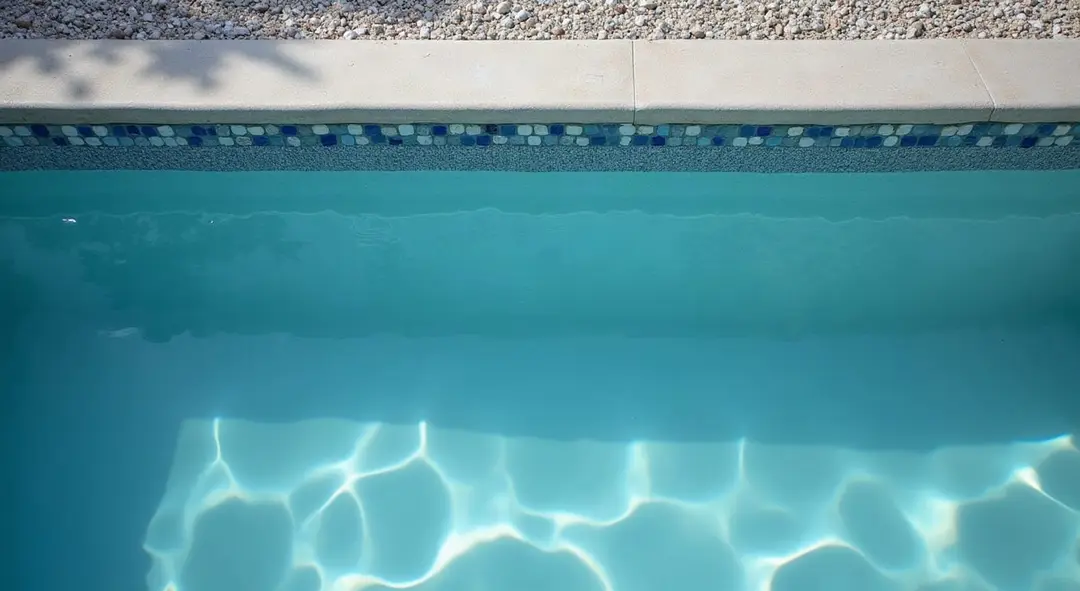
Interior finishes and water care
The common interior finishes differ in texture, color, cost, and upkeep. Saltwater chlorination is a water-care choice, not a finish.
White or tinted plaster
The traditional cement-based interior finish and usually the simplest option. A smooth surface, but more prone to etching and staining as water chemistry drifts.
Quartz aggregate
Plaster blended with crushed quartz for a harder surface and more color choices. A middle option between plain plaster and pebble.
Pebble aggregate
Small stones set in cement and exposed for a textured surface. Rougher underfoot than plaster, with natural color variation that suits desert settings.
Glass or porcelain tile
Common at the waterline, where it is easier to clean than plaster, and sometimes used for a full interior. Usually the most expensive finish.
Saltwater chlorination
A cell that makes chlorine from dissolved salt. The water still needs testing and balancing, and the cell needs periodic cleaning and eventual replacement.

How a pool lot divides
Most backyard pool plans come down to a few areas: the water, the deck, shade for sitting, an equipment pad, and the barrier. In Scottsdale the site plan shows setbacks, easements, the barrier, and the equipment location.
- Pool
- Deck
- Shade structure
- Draw it on the site plan so the setbacks and easements account for it.
- Equipment pad
- In Scottsdale, at least 10 ft from any opening to a neighbor's living space.
- Barrier and gate
- In Scottsdale, at least 60 in. high, measured on the side away from the pool.
How a pool project usually runs
-
Confirm the jurisdiction and lot limits
The first question is which office issues the permit for the parcel.
-
Design and HOA review
Many master-planned communities in north Scottsdale have design review, so owners usually get written approval under the CC&Rs before the permit submittal. Carefree's pool checklist asks for an HOA approval letter; Cave Creek says HOA approval is not a town requirement.
-
Site plan and permits
The builder submits a site plan showing setbacks, easements, the barrier, and the equipment location. In Scottsdale the pool plan is not approved until the fence or wall plan is. Disturbing 0.10 acre or more also needs a Maricopa County dust control permit.
-
Excavation and shell
Scottsdale requires construction fencing at least 60 in. high around the site from the start of excavation. Digging shows what the soil survey can only suggest. Steel, plumbing, and the sprayed concrete shell follow.
-
Decking, equipment, and barrier
Decking, the equipment pad, and the permanent barrier come next. Under federal rules, pool pump motors of 1.15 to 5 hp made on or after September 29, 2025 must be variable-speed.
-
Interior finish and startup
Under Arizona law, the final staged payment on a residential pool contract is due before the interior finish goes on. After the finish, the pool is filled, the water is balanced, and the owner is shown how to run the equipment.
Guides
Longer explanations of the rules and decisions behind a pool project, each with its sources and the date it was last checked.
-
What Arizona law says about a residential pool contract
Arizona has a statute written for residential pool contracts. It caps the down payment, sets four staged payments, and requires the contractor to offer bonds. Use it to check a pool contract before you sign.
Updated
-
Pool pumps, energy, and water in Scottsdale
Pool pump motors of 1.15 to 5 hp made since September 29, 2025 must be variable-speed. The guide covers the rule, the SRP and APS split, current rebates, and how covers cut evaporation.
Updated
-
Pool barrier and alarm rules in Scottsdale and nearby towns
Scottsdale requires a 60-inch barrier and self-latching gates. The guide covers the city code, state law, and how nearby towns differ.
Updated
Common questions
Who issues the pool permit for a Scottsdale address?
It depends on the parcel, not the mailing address. Inside city limits, the City of Scottsdale issues pool permits. Paradise Valley, Fountain Hills, Cave Creek, and Carefree run their own permit offices, and unincorporated land goes to Maricopa County Planning & Development. Confirm the jurisdiction before plans are drawn.
What pool code does Scottsdale use?
The city applies the 2021 International Swimming Pool and Spa Code with local amendments, in Chapter 31, Article XIII of the city code. The amendments require construction fencing at least 60 in. high from the start of excavation and written notice of the barrier rules from the pool contractor to the owner. They also set the specifications for entrance alarms, one of the options where a house wall forms part of the barrier. Fountain Hills adopted the 2024 edition, effective September 1, 2025.
How close to the property line can a pool go?
In the City of Scottsdale, the standard pool setback is 2 ft from the property line unless an easement affects the lot. Pool equipment must be at least 10 ft from any opening to a neighbor's living space, and pools and equipment cannot sit in a public utility easement. Unincorporated Maricopa County requires at least 3 ft from all property lines.
Will the excavation hit caliche?
Some lots will. NRCS soil surveys for north Scottsdale, Cave Creek, and Carefree map many soils with shallow bedrock or cemented hardpans, caliche among them, but conditions change from lot to lot. A geotechnical report or a test excavation is the way to find out before the price is settled.
How much can a pool contractor ask for up front in Arizona?
Under A.R.S. §32-1158.01, the down payment on a residential pool contract with an owner-occupant is capped at 15% of the price. Three progress payments of up to 25% each follow: after excavation; after steel, plumbing, and the concrete shell; and after decking. The remaining balance is due before the interior finish goes on. The contractor must also offer payment and performance bonds at the buyer's cost.
What ROC license should a residential pool contractor hold?
For a new residential pool, look for an Arizona Registrar of Contractors B-5 or B-6 license, the dual KA-5 or KA-6, or a B-4 or KA engineering license, whose scope includes B-5 work (A.A.C. R4-9-103, R4-9-104). An R-6 service license does not cover a full plaster or pebble replacement. Arizona's small-job exemption does not apply to work that needs a building permit, so a contractor you hire for a permitted pool job needs an ROC license.
Are there rebates for pool covers or pumps?
As of October 2026, SRP says it no longer offers a pool pump rebate, and Scottsdale Water lists no pool-cover or pool-pump rebate. As of October 2026, Scottsdale Water's rebate page lists a pool removal rebate of up to $1,500 with an April 30, 2027 deadline, but also says removal rebates closed March 31, 2026 and require a pre-inspection before removal. Confirm the status with the Water Conservation Office (480-312-5650) before you plan on it. Separately, federal rules now require variable-speed motors on pool pumps of 1.15 to 5 hp made on or after September 29, 2025.
When is monsoon season, and how does it affect a pool?
The National Weather Service in Phoenix defines monsoon season as June 15 to September 30, with damaging wind, heavy rain, lightning, and dust storms. The city's homeowner drainage guide says a pool should not sit in a low spot or block a wash or the drainage around the house.
Does an HOA have to approve a pool?
Check the CC&Rs, because many north Scottsdale communities have design review. Carefree's pool checklist requires an HOA approval letter with the permit submittal, while Cave Creek says HOA approval is not a town requirement. Under A.R.S. §33-1817(B), an association's approval of plans "shall not unreasonably be withheld."
Ready to talk with a pool contractor?
Describe the lot and what you have in mind. The request goes to an independent local pool contractor, who may contact you to discuss it.